
Hamilton is one of the most geographically unique cities in Southern Ontario, and that geography has a real impact on your home’s exterior. Between the Niagara Escarpment, known locally as “the Mountain,” and the lake effect weather rolling in off Lake Ontario, Hamilton homes face a distinct set of climate challenges that homeowners in flatter, inland communities simply don’t deal with. Understanding how this local geography affects your siding, eavestroughs, and exterior can help you make smarter decisions about materials, maintenance, and timing.
Hamilton’s Two Climate Zones: Above and Below the Escarpment
The Niagara Escarpment cuts directly through Hamilton, creating what’s essentially two different microclimates within the same city. Homes on top of the Mountain experience shorter frost-free periods and colder January and July temperatures compared to homes below the escarpment. Meanwhile, neighborhoods closer to the lake and along the escarpment’s base benefit from a slightly milder, more sheltered climate. In winter, though, that shelter comes with a tradeoff: areas closer to the top of the Mountain are more exposed to wind-whipped lake effect snow, while the escarpment itself can funnel and intensify wind gusts as they move across the region.
Lake Effect Snow and What It Means for Your Siding and Eavestroughs
Lake Ontario doesn’t just bring humidity in the summer. In winter, it fuels lake effect snow squalls that can dump heavy, wind-driven snow on Hamilton with very little warning. These systems are often accompanied by rapid temperature swings and strong wind gusts, conditions that put real stress on siding panels, eavestrough hangers, and fascia boards. Heavy, wet snow that accumulates and refreezes on eavestroughs adds significant weight, and if your gutters weren’t installed with the proper slope and hanger spacing, that weight can cause sagging, pulling away from the fascia, or outright failure. Properly installed seamless eavestroughs, with correctly spaced hangers and adequate pitch, are built to handle this kind of load far better than older sectional systems with more joints and weaker connection points.
Escarpment Winds: A Real Threat to Loose or Aging Siding
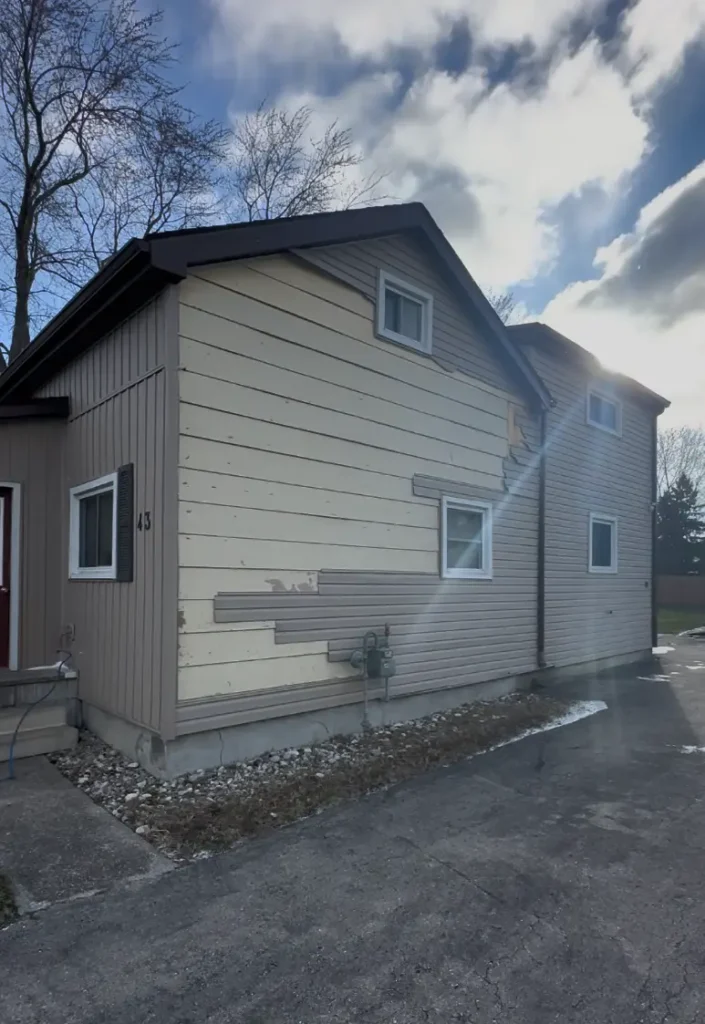
Wind is one of the most underestimated threats to a home’s exterior in Hamilton. Environment Canada has issued wind warnings for the Hamilton region with gusts reaching up to 110 kilometres per hour, strong enough to cause damage to roofs, fences, and other exterior structures. The escarpment’s terrain can intensify these gusts as they move across the Mountain and down into surrounding neighborhoods, particularly in more exposed areas of Ancaster, Waterdown, and the upper Hamilton Mountain. Siding that’s aging, improperly fastened, or missing proper expansion gaps is far more vulnerable to being lifted, cracked, or torn away during these high-wind events. Homes with older or poorly installed siding are also more likely to develop small gaps that let wind-driven rain behind the panels, leading to hidden moisture damage over time.
Freeze-Thaw Cycles and the Toll on Exterior Materials
Southern Ontario’s continental climate, moderated by the Great Lakes, produces frequent freeze-thaw cycles throughout the winter and shoulder seasons. Water that gets behind aging siding, into cracked caulking, or trapped in poorly draining eavestroughs will freeze, expand, and thaw repeatedly. Over time, this cycle widens small cracks into larger structural problems, accelerates the failure of caulking and trim, and can even affect fascia boards that have absorbed moisture. Homes on the north-facing slopes of the escarpment tend to experience cooler temperatures and higher soil moisture than south-facing areas, which can mean slightly more exposure to these freeze-thaw effects depending on where in Hamilton your home sits.
What This Means for Hamilton Homeowners
Given Hamilton’s unique blend of lake effect snow, escarpment winds, and freeze-thaw cycles, a few things matter more here than in many other Southern Ontario communities:
- Proper installation matters more than ever. Correct nailing patterns, expansion gaps, and fastening are what keep siding secure during high-wind events.
- Seamless eavestroughs handle snow load better. Fewer joints and custom-fit panels mean fewer weak points where heavy, wet snow can cause failure.
- Where your home sits matters. Homes higher on the Mountain or in more exposed areas may benefit from slightly more robust materials and more frequent inspections.
- Regular inspections catch small problems early. A minor gap or loose panel today can become a major leak or structural issue after a few freeze-thaw cycles.
- Quality materials pay off. Products engineered for Canadian winters, like Gentek’s vinyl siding line, are built to withstand the specific stresses of a climate like Hamilton’s.
Protecting Homes Across Hamilton and the Surrounding Areas
Elite Exteriors and Siding Renovations understands that a home in Ancaster faces different exposure than one in Stoney Creek or on the Hamilton Mountain, and that’s exactly why local knowledge matters when it comes to exterior renovations. Whether your home needs new siding designed to hold up against escarpment winds, seamless eavestroughs built to manage lake effect snow load, or soffit and fascia replacement to protect against freeze-thaw damage, having a contractor who understands Hamilton’s specific climate challenges makes a real difference in how long your exterior lasts.

Get a Free Exterior Assessment
If your home has been showing signs of wind damage, sagging eavestroughs, or siding that’s struggled to keep up with Hamilton’s demanding climate, Elite Exteriors is here to help. Request a free, no-pressure quote and let’s talk about how to protect your home against everything the escarpment and the lake can bring. Learn more about our services in your area on the Hamilton service page.